Avatar: Fire and Ash 4K UHD Review


Level ThreeMovie 2/5
The digital water in Avatar: Fire and Ash looks utterly, totally, and completely realistic. Digital animators spent years (decades even) of man hours to produce on-screen liquid indistinguishable from the real thing. Yet, the real thing continues to exist. Jaws shot on water. Enjoyable junk like Waterworld shot on water. Director James Cameron himself directed The Abyss and Titanic, two of the greatest water movies ever made. It’s hard. Brutal.
But James Cameron had $400 million to make this movie, and can use the marketing to tell you as much, because the more that’s spent on polygonal water, the easier Avatar: Fire and Ash is to sell.
This is a movie series about protecting, respecting, and acknowledging nature, yet never once has a single piece of authentic nature depicted. None of them do. Three movies. All near or over three hours. And they chewed through more nature in the power required to render digital effects than they likely would have if they filmed real trees. Avatar: Fire and Ash is a movie in awe of itself, driven by a director who believes technology solves everything, even as the technological returns are dwindling. Once you’ve arrived at authentic-looking water, there’s nowhere else to go.
The best part of Avatar: Fire and Ash’s script is unintentionally hilarious. Series protagonist Jake Sully is imprisoned. Out of nowhere, a marine biologist character – previously unseen – appears in the story, gives a speech about doing the right thing to protect this alien civilization, rescues Sully in a ludicrously oversized bulldozer, then disappears for the rest of the movie. There’s no anti-war or anti-capitalist statement; it’s a character designed for convenience. This pairs well to an earlier scene when the Na’vi try to save the life of Spider (Jack Champion), put a glowing stick in his mouth, and when asked what they’re doing reply with, “This feels right”. Why? Because the writers don’t know how any of this works either.
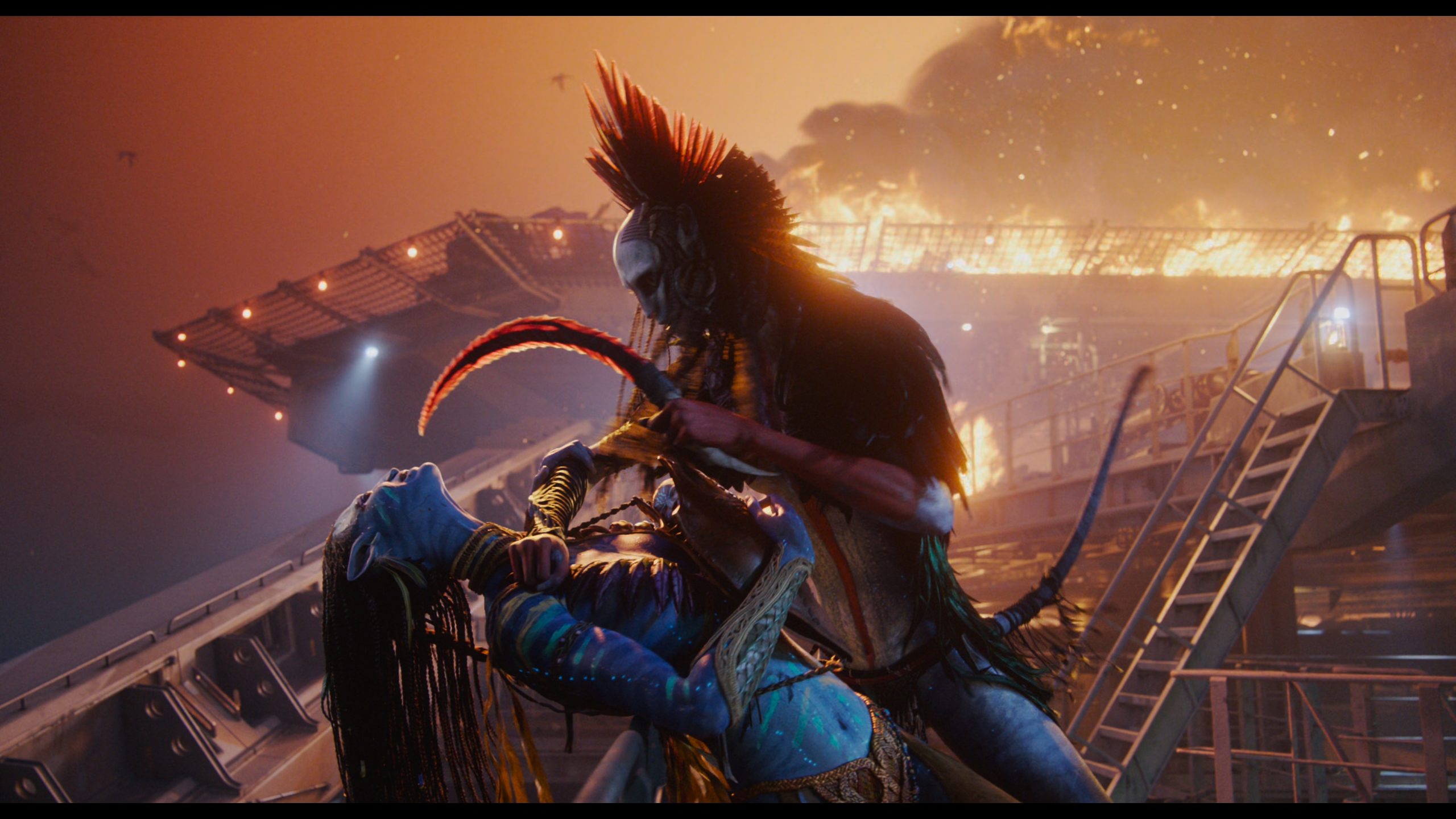
It’s icky to think that with infinite technology to render anything imaginable, the aim is to simply make everything look and feel real. Why bother? The climax of Avatar: Fire and Ash, with Sully and his Na’vi friends wandering the bowels of a ship aflame, is utterly indistinguishable from the finale of Way of Water. To praise these movies for their tech prowess is to fall for advertising hype. Yes, it’s impressive, but then so is every other spectacle-laden CG-driven blockbuster. There’s no visual separation, no personal signatures or style. It’s impossible to tell them apart anymore, certainly not movies in the same franchise recycling the same nature/family drama across the equivalent of jungle, water, and lava video game levels.

VideoVideo 5/5
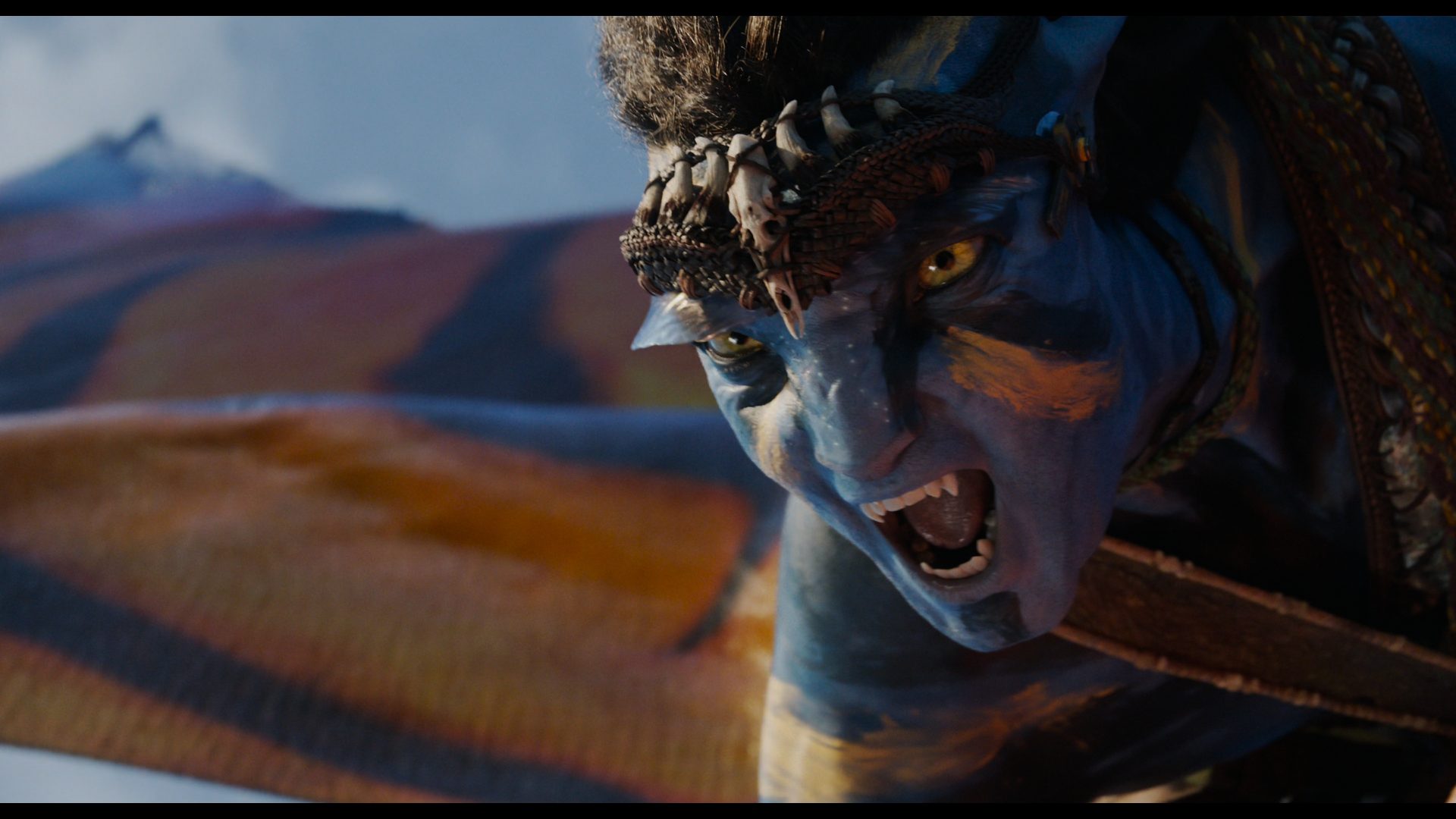
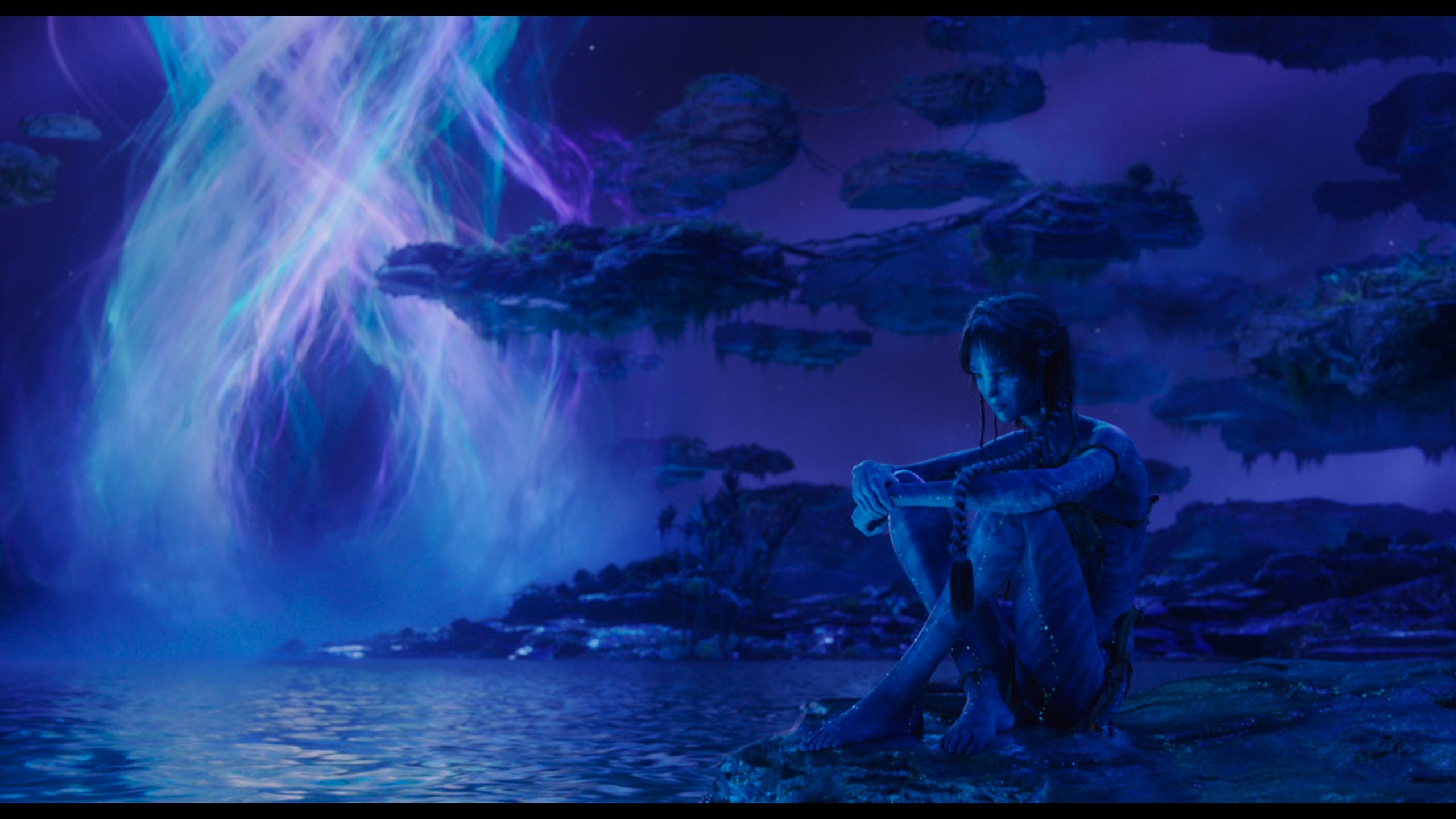
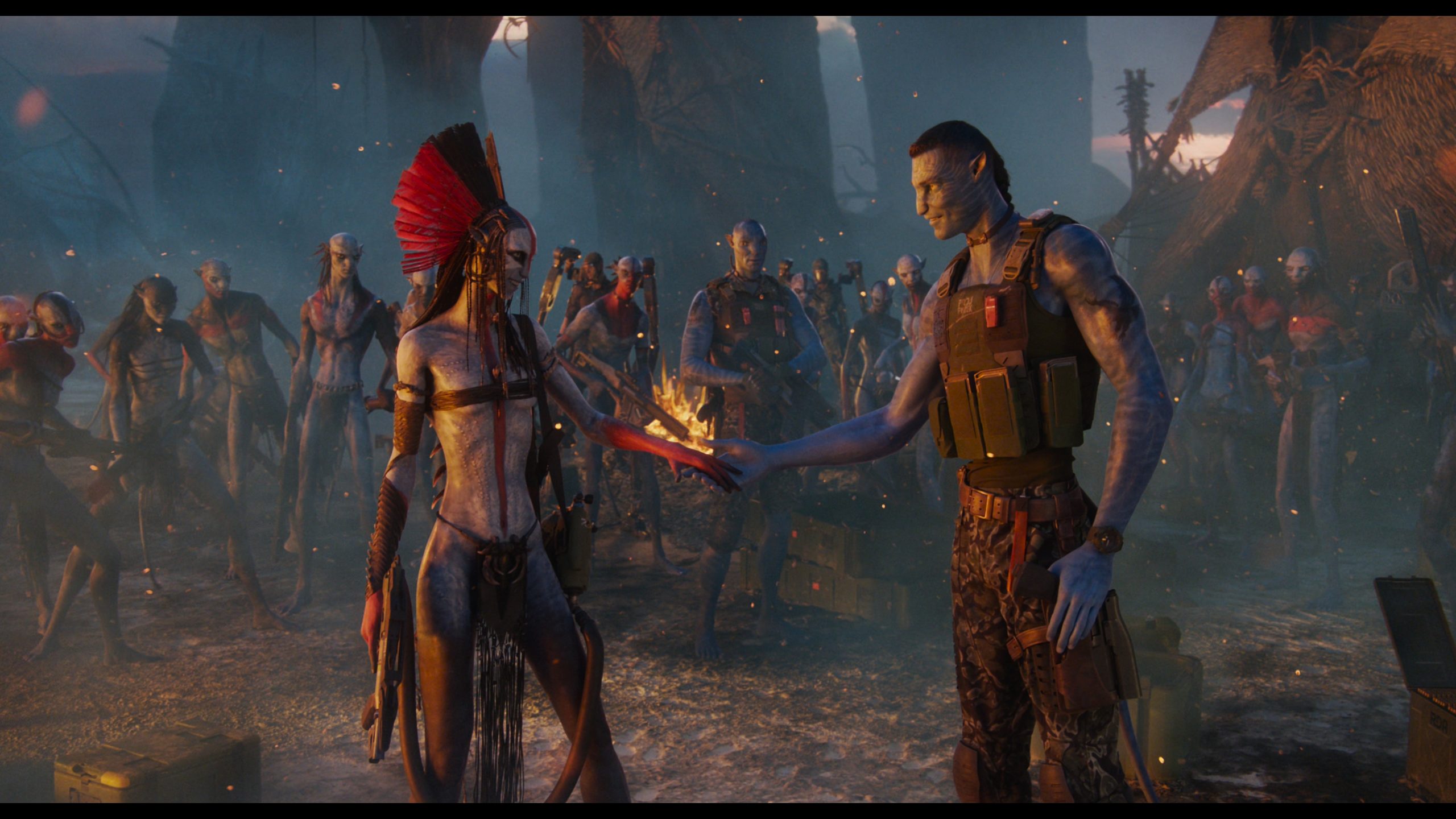
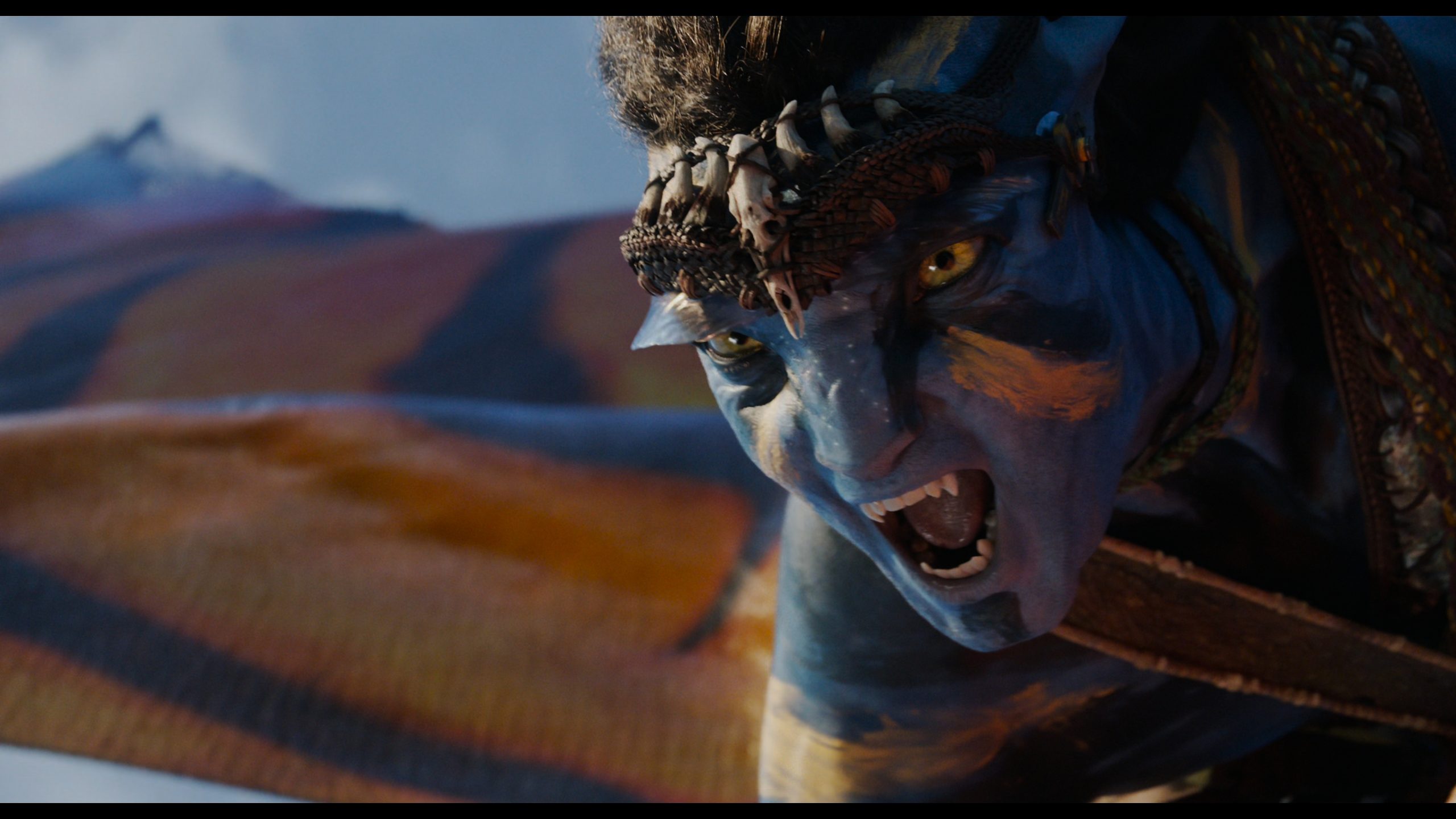
Unsurprisingly gorgeous, Avatar: Fire and Ash joins the first Avatar sequel as an A/V marvel. This is pure luxury, with vivid, saturated color in every frame. The blues of the Na’vi (and waters) the fire, the lava, etc. All of it shows exemplary vividness, with jaw-dropping beauty. Color density looks marvelous and pure. It’s raw digital splendor.
Pandora becomes the perfect setting to showcase the Dolby Vision pass too, gleaming sun dressing up many of the scenes. Glistening water is spectacle. Electronic lights shine, and flames sprout intense brightness.
Full 4K visuals draw out the texture within the CG characters, even better than the human actors standing on green screen sets. Jake Sully’s hair is defined to the last strand when in close. Perfect compression manages the complex imagery (including large pockets of embers) without fault, no small feat for a film this lengthy on a single disc. Sprawling environments show no seams or resolution flaws; it’s all precise and clear (spotless too, without noise), making full use of the format’s capabilities.
AudioAudio 5/5
Overly hefty on the low-end, Avatar: Fire and Ash sounds sensational, but the balance is skewed to the low-end. Dialog and other effects sound muted in comparison at standard reference volume, the bass potent enough to sound bloated. Gunfire comes through beefy and loud. Explosions are pronounced. Flames roar. The vibrating calls of whale creatures shock the entire room with their potency.
Surround/height use is reference grade. Beyond the aural lushness of the jungles and their high-end ambiance, action scenes are nothing short of flawless, imbalanced or not. Flying creatures sweep through the soundstage effortlessly, directional changes smooth and precise. In other circumstances, the score’s spread would earn high marks too – and it’s outstanding too – but there’s so much else to take notice of. It’s world class audio design through the through, brought home without fault.
ExtrasExtras 4/5
Three discs inside the set – one 4K and one Blu-ray for the movie itself, a third for all extras – with the bonuses beginning with Igniting the Flame that’s split into 11 parts, focused on various aspects of the production, in-depth. There’s a tribute to John Landau, and two in-universe tutorials about living on Pandora, then a music video to round it out.
Movie
Avatar: Fire and Ash is almost indistinguishable from what came before, and it’s three more hours of the same thing.









Leave a Reply
You must be logged in to post a comment.