The Invincible Eight Blu-ray Review

Lo Wei Before Bruce LeeMovie 3/5
It’s difficult not to feel a twinge of pity watching Lo Wei’s The Invincible Eight stumble around, because you can almost see the blueprint the director smuggled out of Shaw Brothers come to life. After a respectable run at the studio crafting wuxia programmers like The Golden Swallow, Lo Wei (Fists of Fury) decamped to the upstart Golden Harvest with the perfectly reasonable idea that a swordsmen-on-a-mission picture would print money. What lands on screen plays less like a triumphant second act and more like a dutiful photocopy.
The scaffolding is lifted directly from The Magnificent Seven, which itself was already a Western remix of Seven Samurai, so no one’s expecting originality. A mountain village is terrorized by a bandit clan, and a grieving widow (Angela Mao radiating more intensity than the material deserves) assembles a team of eight warriors to fight back. A remote village, terrorized by the predictably sadistic “Chief of the Bandits” and his interchangeable horde, dispatches a desperate emissary to recruit warriors-for-hire. One by one, eight assorted swordsmen, hand-to-hand specialists, and roguish drifters are assembled, each sporting a single identifying trait in lieu of a personality. What’s interesting is the inclusion of women in this motley assembly, all children of men who lost their lives at the hand of the evil General Hsiao (Han Ying Chieh).
The Invincible Eight feels stranded on the precipice between eras and a hollow echo of a historical style Lo Wei was about to change up with Bruce Lee
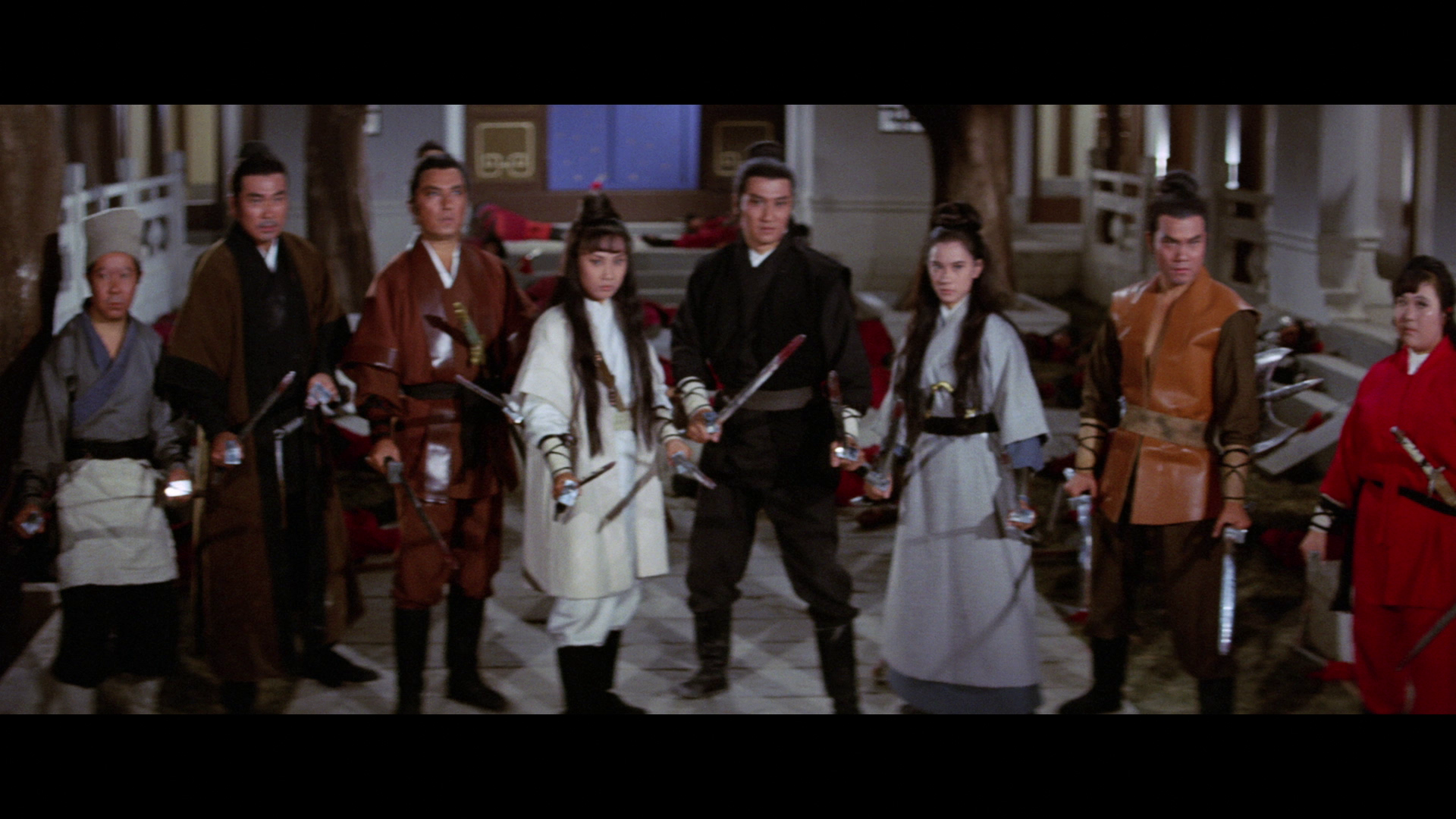
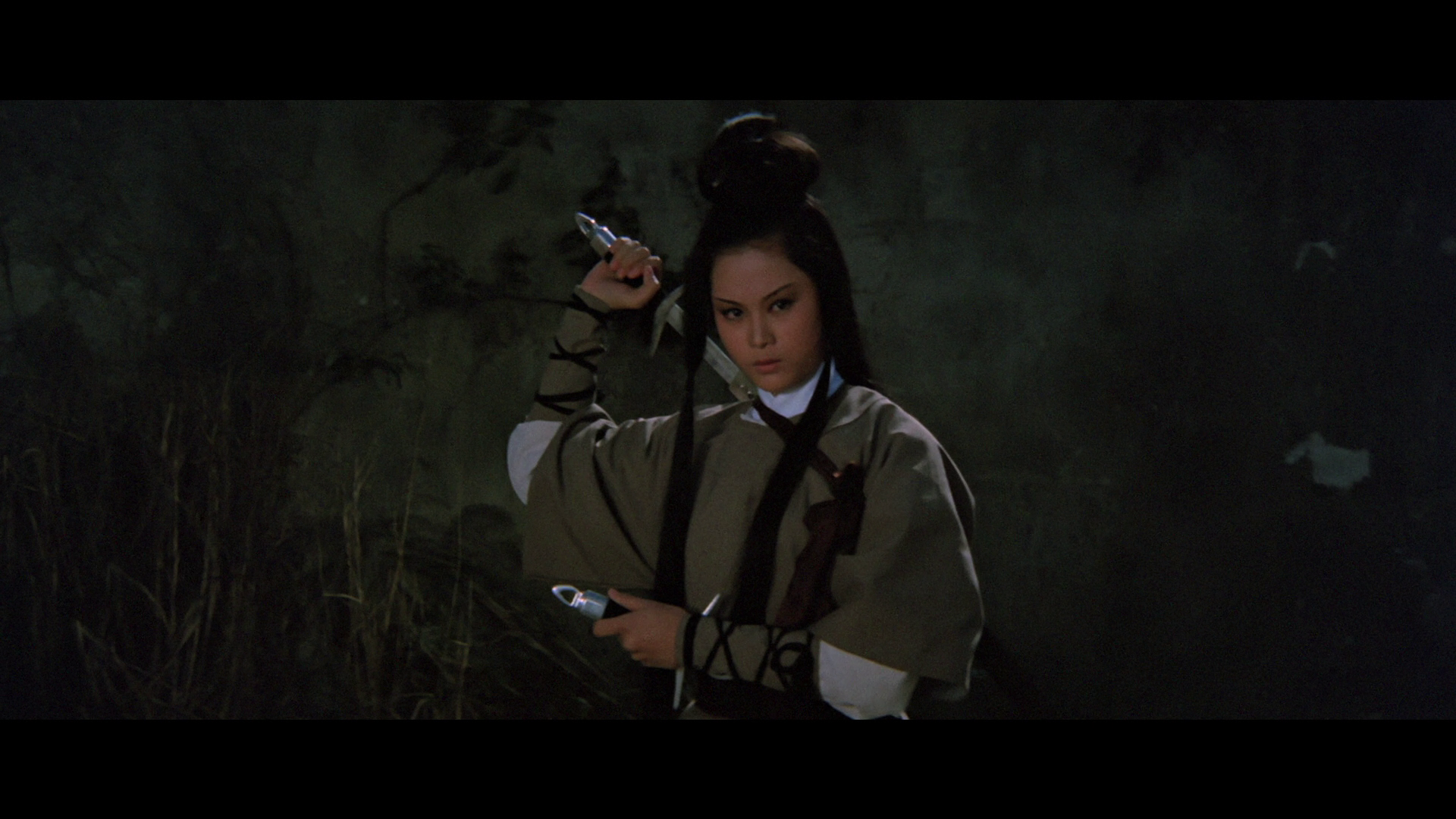
The recruitment procession ticks the usual martial arts boxes—the stoic swordsman, the brawler, the knife-thrower—but Lo Wei exhibits little interest in building these archetypes into characters. One major issue is they never fully assemble until the final act, which is a serious mistake. They stand around in formation as if waiting for a group photo, and when the climactic siege arrives, it’s hard to muster much concern over who limps away. The film’s muddled plotting bites off more than it can chew.
The action does attempt a few distinctive flourishes, most notably the liberal use of trampolines to send fighters springing into frame like gazelles. It’s a genuinely new addition that would later be refined into aerial ballet by choreographers with real vision, but here the effect is more pogo stick than wire-fu poetry. Outside of those brief, bouncy interludes, the combat settles into a numbing rhythm of clanging steel and tumbling bodies that feels rigidly functional rather than expressive.
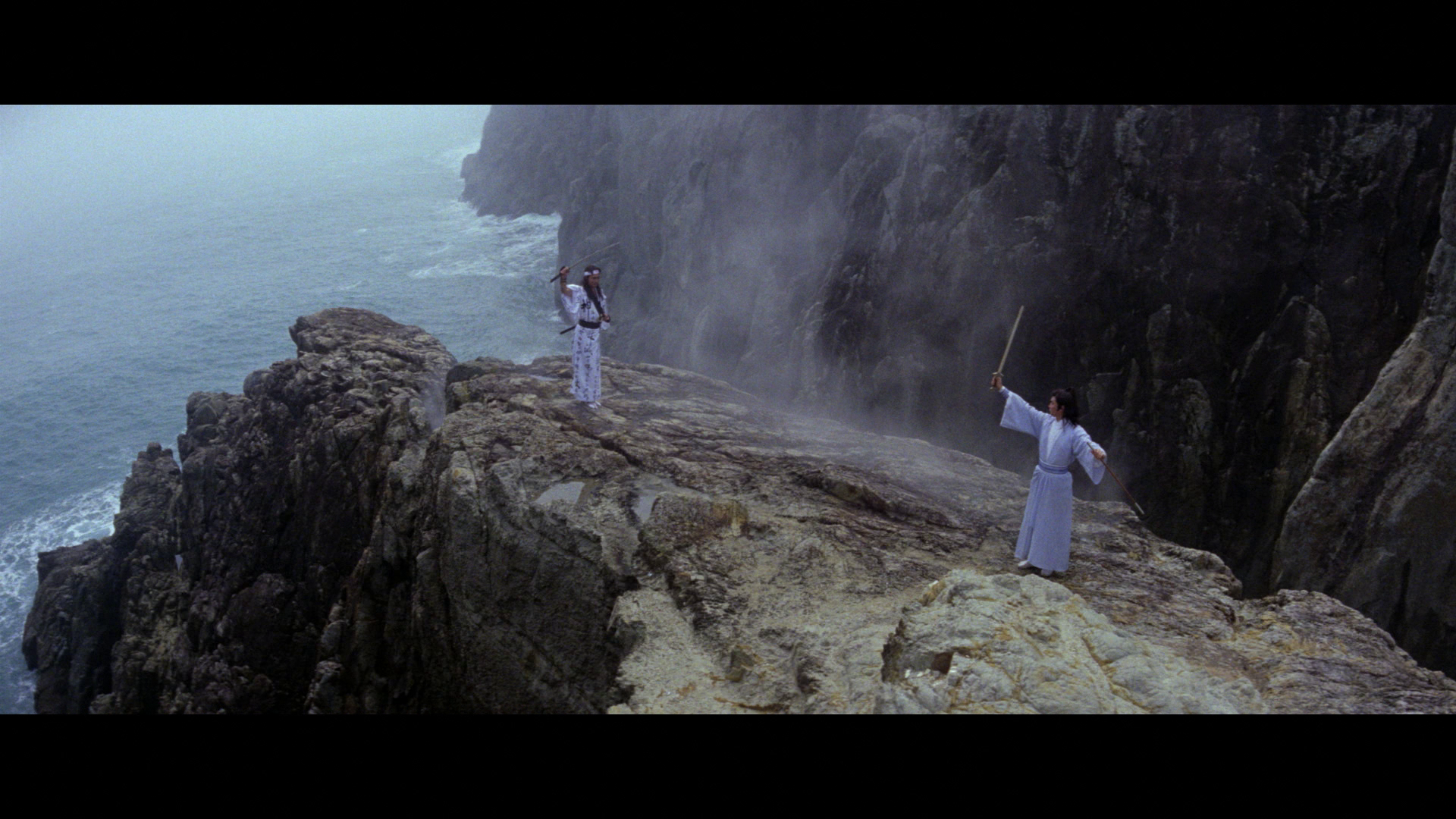
Compare even a single duel in King Hu’s Come Drink with Me or the raw desperation of Chang Cheh’s The One-Armed Swordsman, and The Invincible Eight immediately wilts into the realm of the pedestrian. The choreography is competent enough not to embarrass, but never once does it quicken the pulse or suggest a director with anything new to say. Lo Wei’s direction throughout is that of a man making a work product with little actual soul. He frames the mountainous landscapes nicely, yet there’s no atmosphere seeping in, no sense that these valleys carry the weight of an encroaching threat.
Golden Harvest wanted a respectable genre entry to wave at their rival across town, and that’s precisely what they received: a middling, assembly-line adventure that borrows the exterior of Shaw Brothers prestige without ever locating its heart. The overused trampoline gimmick provides a fleeting novelty for jaded action scholars, but otherwise The Invincible Eight exists as a cultural artifact for completionists. The entire genre would soon be transformed by Bruce Lee and the standards would never be the same again.
Lo Wei’s directorial tenure at Shaw Brothers was mostly a factory apprenticeship dressed in the trappings of auteurism. He learned to marshal large casts, stretch modest budgets, and hammer out competently framed wuxia potboilers like The Sword of Swords without ever tipping into genuine inspiration. When Raymond Chow bolted from Shaw to launch Golden Harvest in 1970, Lo Wei followed, toting a Rolodex of names that had kept the Shaw assembly line humming. The Invincible Eight is the Shaw Bros template executed with honesty, yet with such workmanlike fidelity that even a few new cool items like the Divine Whip formation bore.
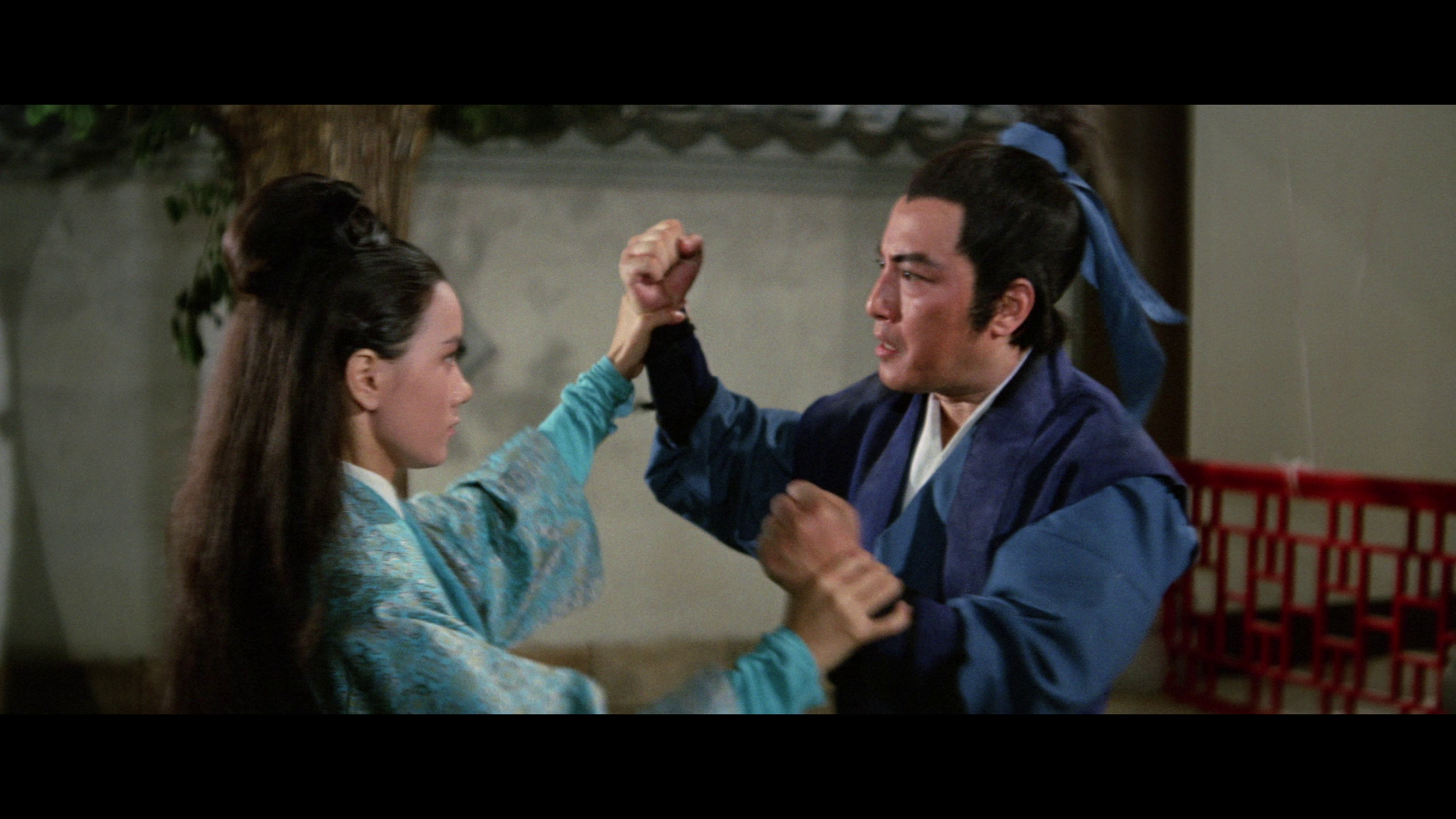
At Shaw Brothers, Lo Wei could drape this sort of hero-assembly business in the studio’s deep roster of contracted stars and their built-in charisma. The Invincible Eight offers a lineup of capable but largely second-drawer players (George Wang, James Tien, Nora Miao in an early decorative role) who are asked to supply presence the script refuses to write. Lo Wei’s staging leans on Shaw-like widescreen group compositions, but the sets look cheaper, the lighting flatter, and the grand-standing camaraderie feels rehearsed rather than dynamic. What should play as an epic of righteous sacrifice lands as a dutiful recitation of someone else’s notes.
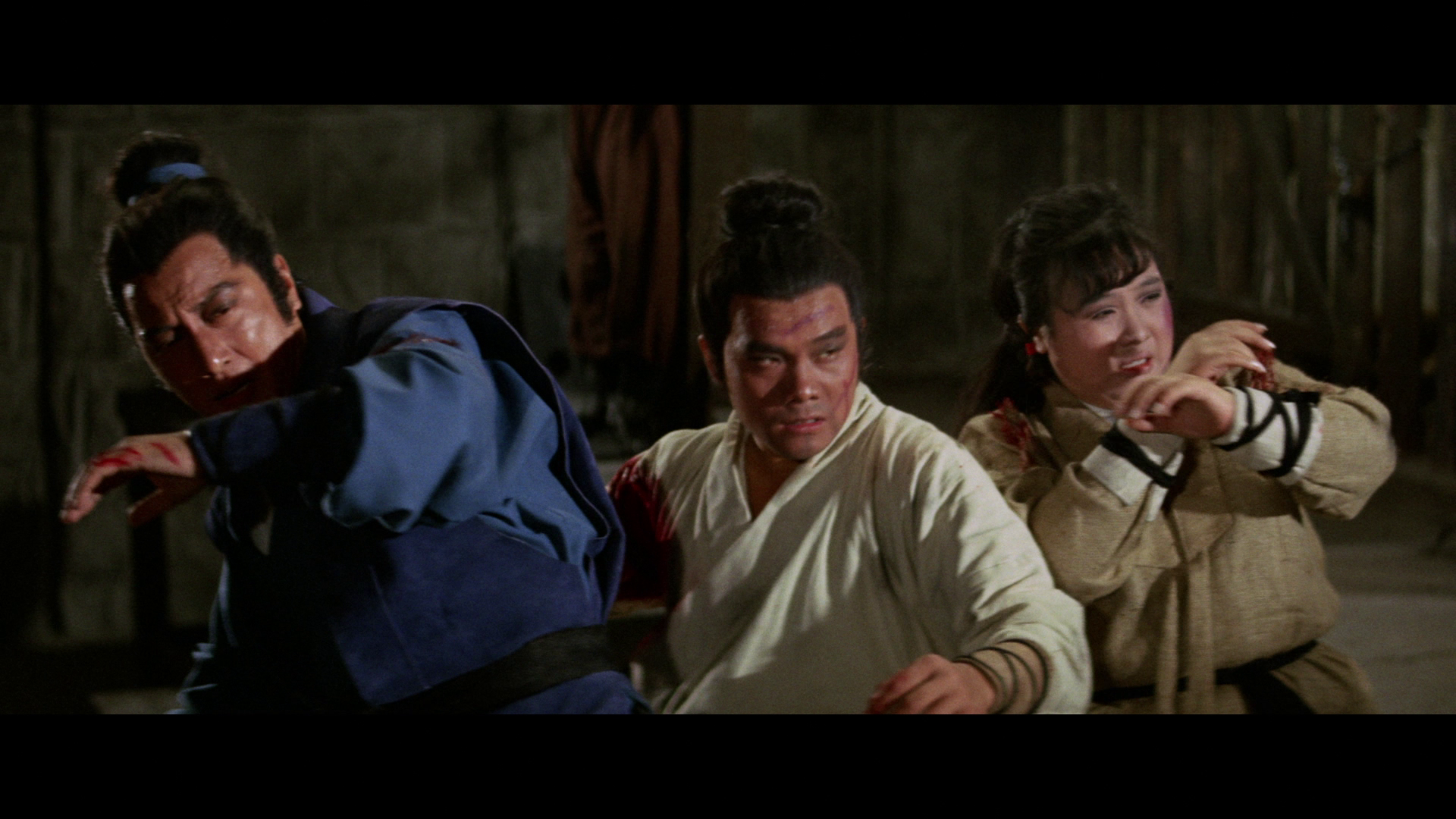
The action is stiff despite Sammo Hung handling some fight choreography. The film does offer liberal use of trampoline-assisted leaps that send fighters bouncing off walls and springing over rooftops with a rubbery, almost vaudevillian energy. It’s a peculiar flourish, and for a few fleeting moments, the screen is filled with bodies defying gravity in a way that’s more carnival than kung fu. Beyond that novelty, the choreography settles into stolid exchanges of blocks, lunges, and hasty cutaways. Compared to the balletic geometry King Hu was refining in A Touch of Zen, or the blood-soaked emotional crescendos Chang Cheh orchestrated in The One-Armed Swordsman, Lo Wei’s fight design here is thoroughly pedestrian. It’s competent enough to move the plot along, but utterly devoid of the rhythm, pain, or ecstatic violence that marks the genre’s landmarks.
Golden Harvest would soon find its footing not by cloning Shaw Brothers’ period-costume epics but by reinventing the martial arts film through the physicality of Bruce Lee (whom Lo Wei would famously direct in The Big Boss later that same year). The Invincible Eight feels stranded on the precipice between eras and a hollow echo of a historical style Lo Wei was about to change up with Bruce Lee.

VideoVideo 3/5
88 Films presents The Invincible Eight in its original theatrical aspect ratio of 2.35:1, and the results are one of the most impressive things about this entire package. Sourced from a new 2K scan of the original camera negative and licensed from Fortune Star, this 1080p transfer demonstrates the kind of archival diligence that a film of this middling caliber scarcely deserves. The main feature runs its uncut 98 minutes on a BD-50, with a superb AVC encode that manages a generous bitrate and avoids the compression gremlins that often plague catalog martial arts titles. This is a transfer that does its job so clinically well it almost becomes the main attraction.
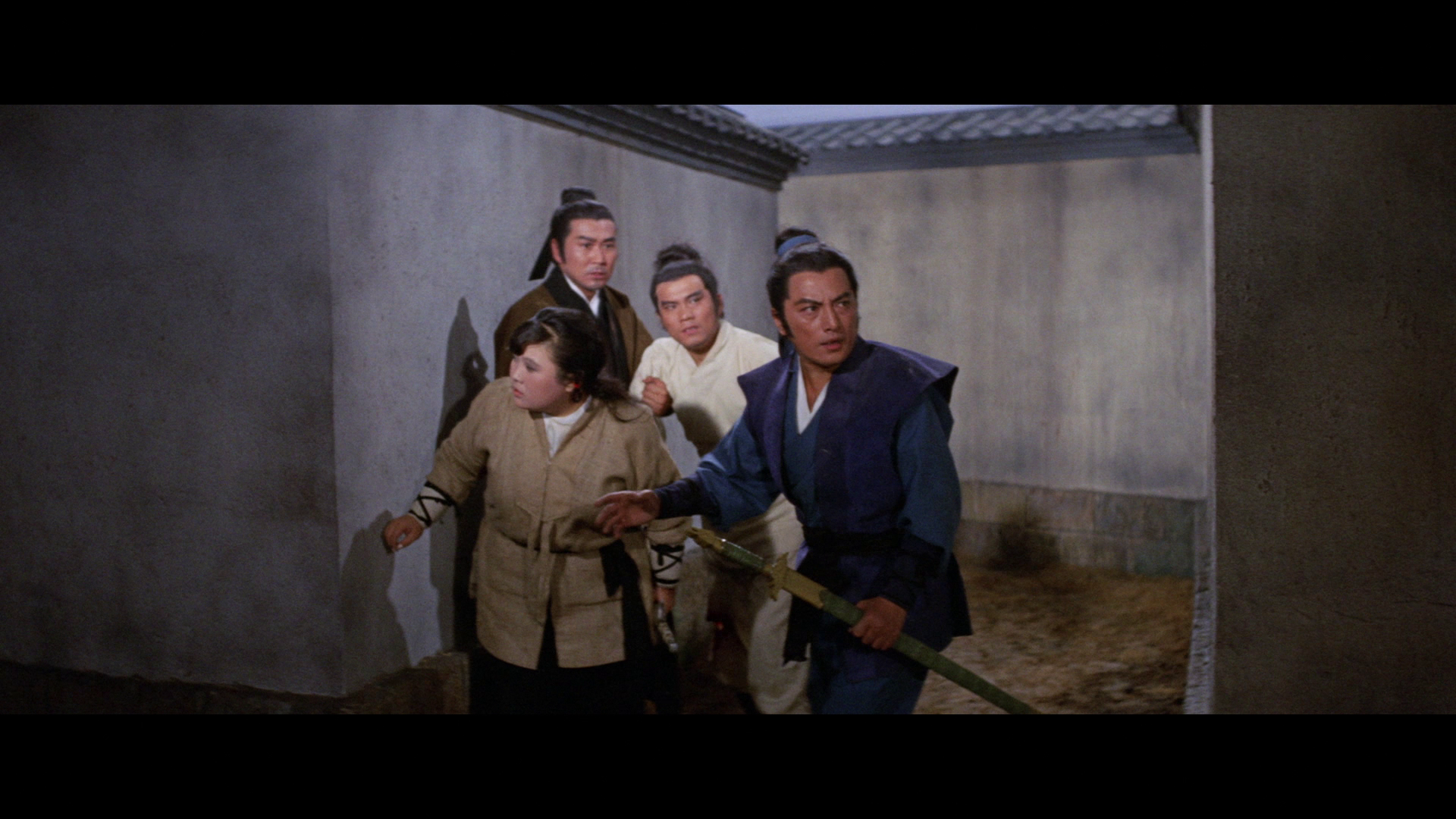
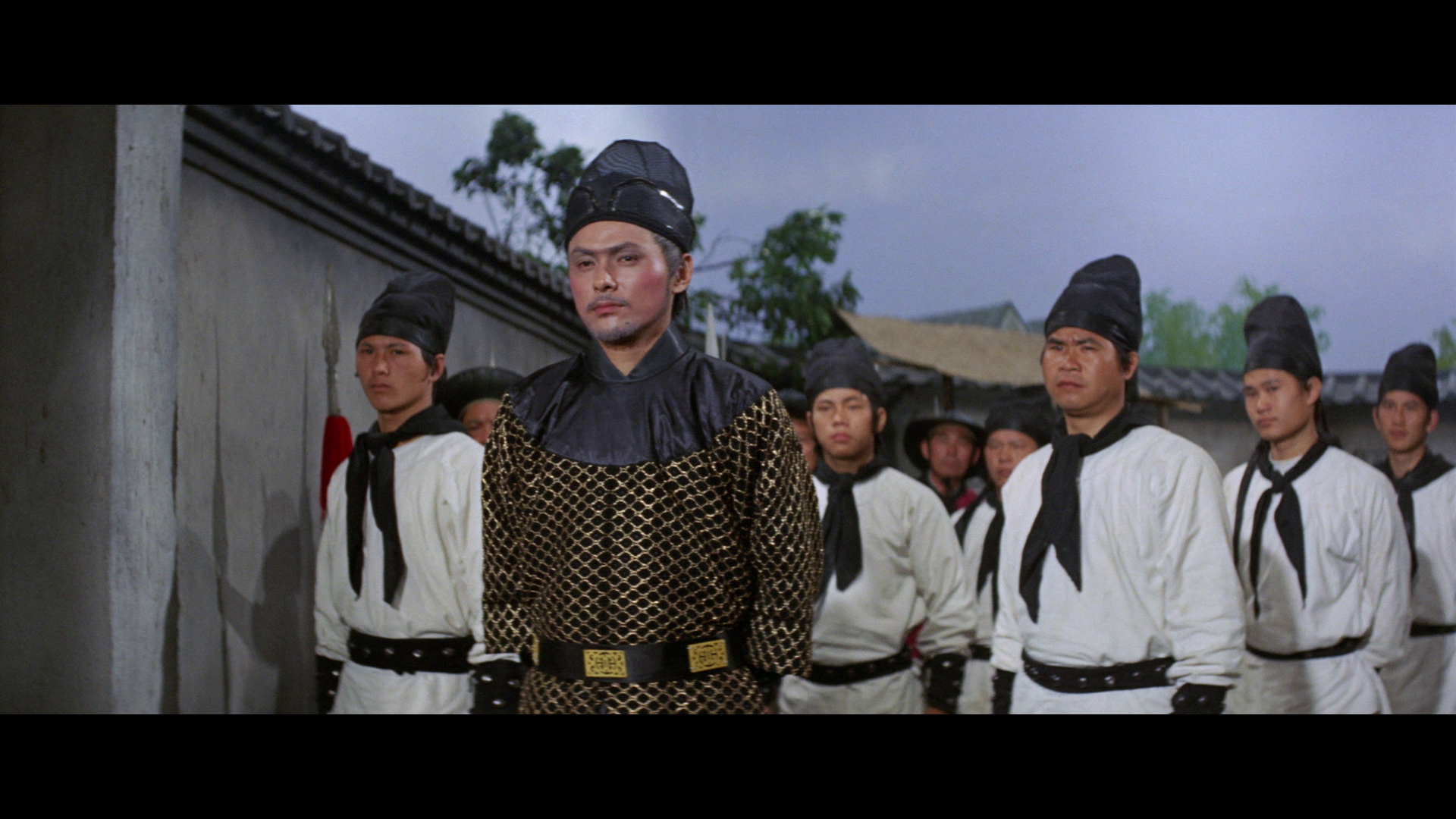
The catch, as any student of Golden Harvest’s early technical misadventures knows, is baked into the source. The studio shot this picture using DyaliScope, a short-lived French anamorphic lens process that was meant to be Golden Harvest’s shortcut to widescreen grandeur on a budget. What it delivered instead was a suite of persistent optical flaws that no 2K scan can remedy, because they aren’t defects of age. They’re defects of design baked into the source material. The most nagging issue is a pronounced horizontal stretching at the extreme edges of the frame. Any composition that drifts toward the far left or right of the screen sees faces and objects pulled subtly outward, as if the image were painted on a balloon being slowly inflated. Vertical lines that should be straight have a faint, weary bend to them, a distortion that intensifies noticeably during the camera’s already-tentative pans.
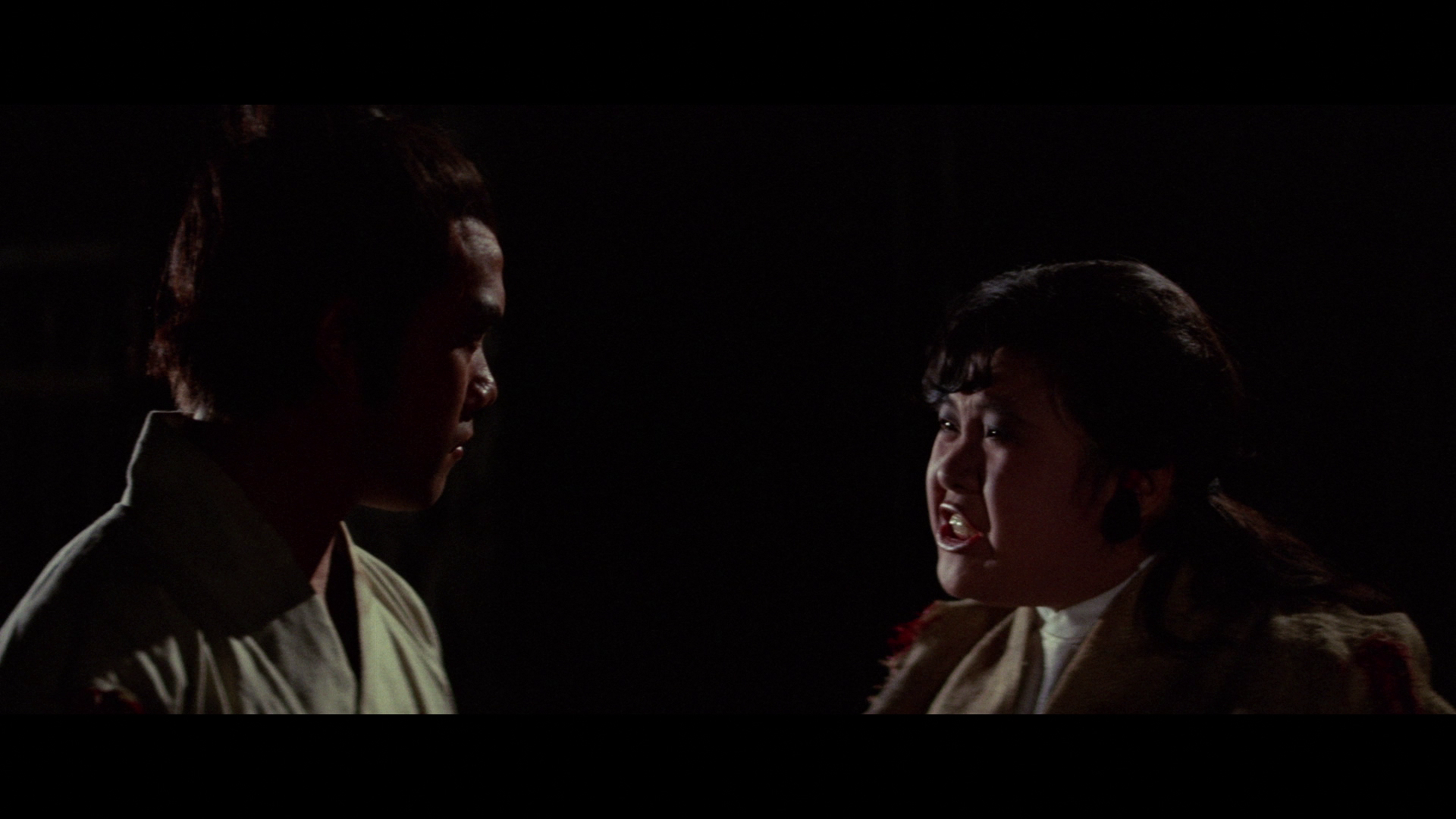
Detail is genuinely strong when the lens cooperates. The grime on a courtyard wall, the weave of a peasant’s tunic, the individual beads of sweat on a fighter’s brow, they are all rendered with a clarity that flatters the new scan even as it unmasks the low-rent set construction. Grain resolves naturally and without the waxy smear of overzealous noise reduction. The encode handles the film’s foggy nighttime ambushes and dusty daylight brawls with equal composure. But the DyaliScope gremlins are ever-present, and they lend the whole affair the faintly askew quality of looking through someone else’s prescription glasses. It isn’t 88 Films’ fault. They’ve rescued exactly what was on the negative. Colors are rather splendid and a punchy contrast works quite well for this material.
AudioAudio 3/5
The original Mandarin soundtrack in monaural is heard in adequate 2.0 PCM. It features a brassy score and chunky sound design that attempts to match the dynamic action on screen such as the Divine Whip formation. Golden Harvest as a new studio hadn’t quite nailed down the production process and that is reflected in this underwhelming soundtrack.
Optional English subtitles play in a white font inside the scope presentation at all times. This is a new translation from the original Mandarin audio.
ExtrasExtras 3/5
88 Films issues The Invincible Eight on Blu-ray, making its North American debut on the format in a sizzling limited edition package. I love the matte yet glossy slipcover – the texture on it is incredible and helps the original art by Aurelio Lorenzo pop. It’s a striking cover almost too good for a movie of this caliber. A reversible sleeve features original Hong Kong movie poster artwork. Inside the single-disc BD case is a fold-out mini-poster.
The primary supplement on disc is a fine new audio commentary by Frank Djeng with Michael Worth, who must have done several hundred of them by now over the years.
The BD is coded for Region A. Eureka issued a competing Blu-ray for Europe locked to Region B. The differences are fairly minimal between the releases.
Audio Commentary with Asian Cinema Experts Frank Djeng & Michael Worth – A solid listen that does peter out a bit near the end but helps add the proper context appreciating this mixed Golden Harvest effort. Michael Worth complements Frank nicely in the discussion and the two men offer different insights.
The Invincible Eight Trailer (03:39 in HD)
Image Gallery (01:41 in HD)
Full disclosure: This Blu-ray was provided by the label for review. This has not materially affected DoBlu’s editorial process. For information on how we handle all review material, please visit DoBlu’s about us page.
Movie
Director Lo Wei attempts to copy his days at Shaw Brothers for Golden Harvest with middling results




Leave a Reply
You must be logged in to post a comment.